
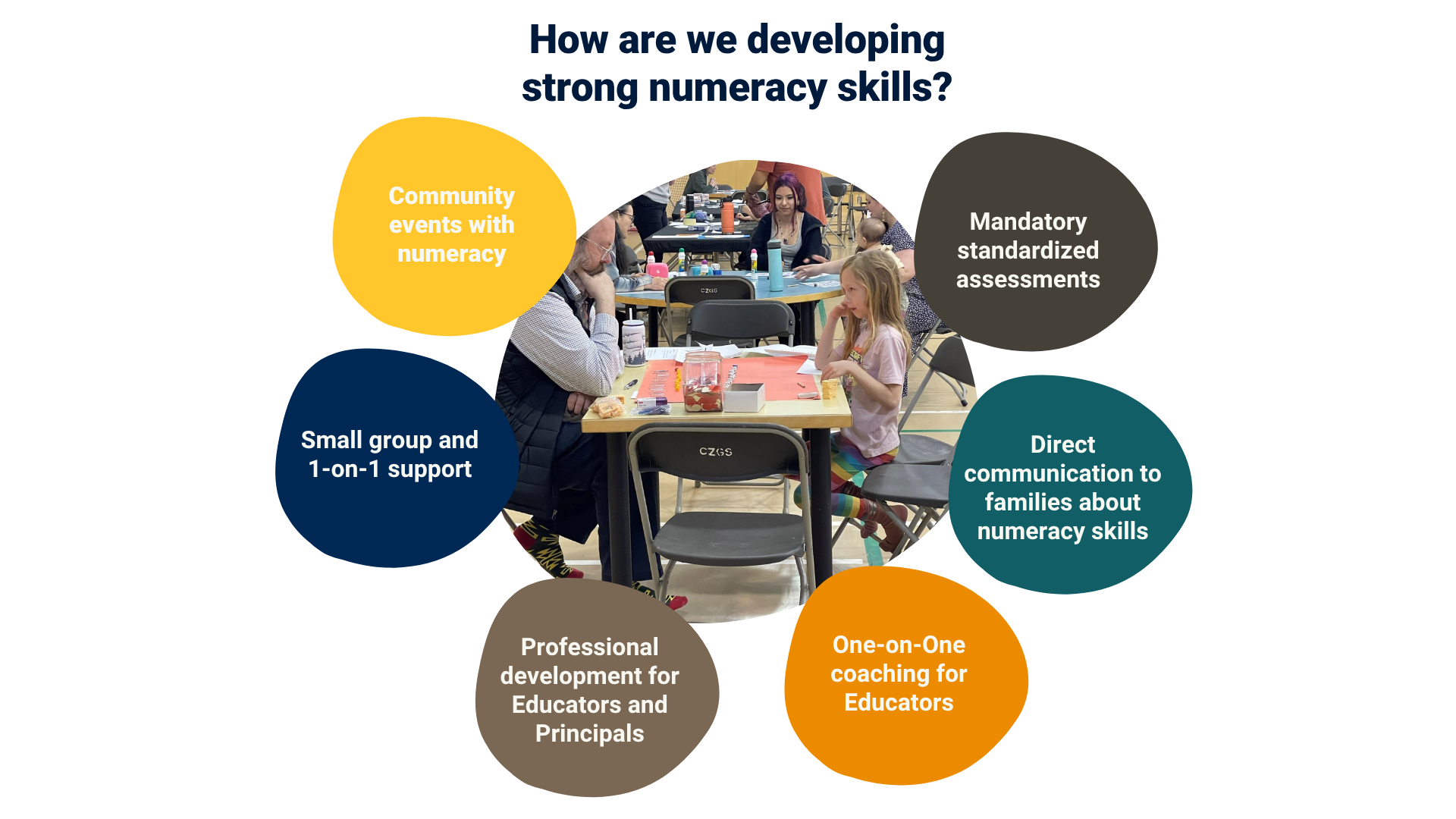
Following our success in Literacy, we are taking a similar approach in Numeracy that uses standardized assessments to inform our approach, and explicit instruction to meet the needs of each, individual Learner.
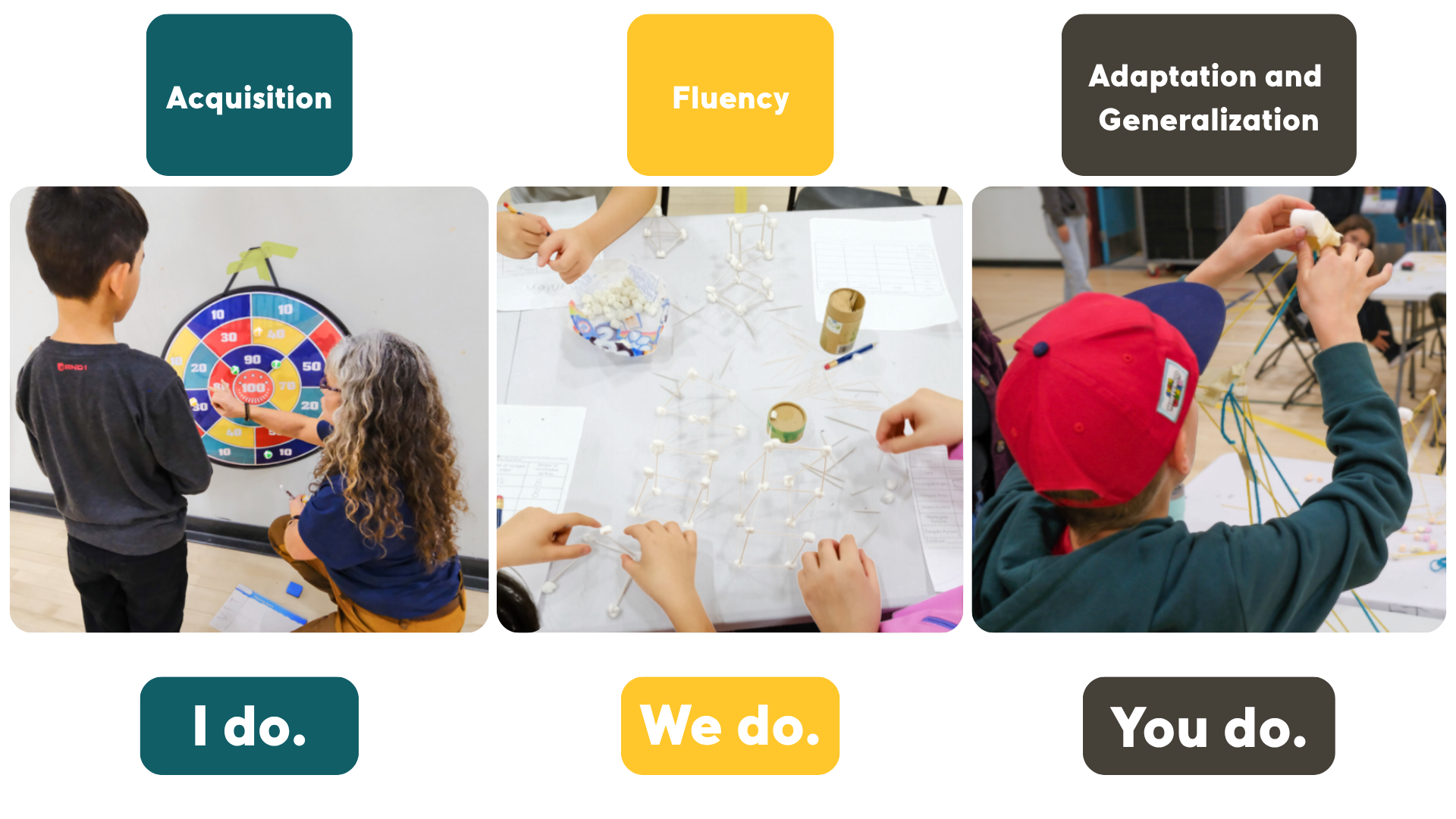
Explicit instruction is a method of teaching that takes small, progressive steps to directly teach skills, while checking for Learner understanding. It engages all Learners to actively participate.

Numeracy Timeline at FNSB
2024/25 - Numeracy Lead and Team created at FNSB
2024/25 - Numeracy Team created and introduced a Fall, Winter and Spring Assessment tool to support FNSB schools
2024/25 - 1-3 day FNSB Math Camps with YFNED
2025/26 - Math camps in the Fall. Researching SpringMath Accelerate and Jump Math, as well as other evidence based resources. Collecting data in the Fall and Spring through assessments created by Numeracy Team.
2026/27 - Collecting data in the Fall and Spring. Introducing new resources for K5-Grade 8, JUMP Math.
Resources for Families
Whether it’s talking about the days of the week, measuring ingredients for a recipe, estimating how far you will travel on your next adventure, or how much wood you will use this winter, there are opportunities in our daily lives to foster our learners’ understanding and positive relationship with numbers.
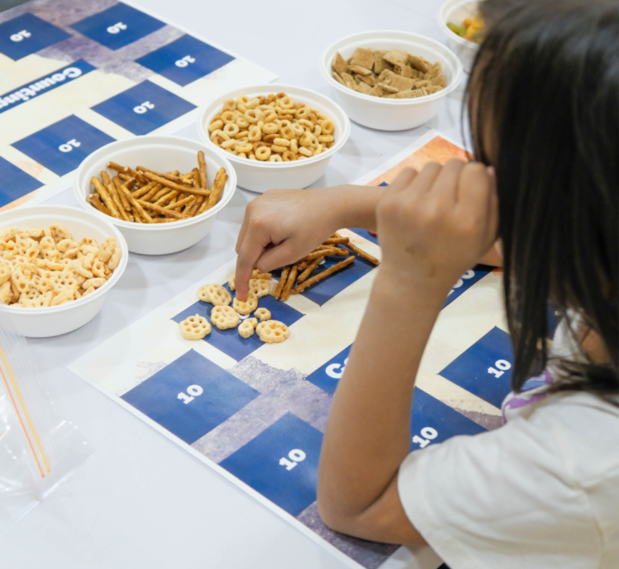
Here are some great ideas that allow you to incorporate numeracy throughout the day.
Group and Sort: Find opportunities to sort and count different types of objects in the home, outside, while cleaning up etc.
Example: if you are picking berries, encourage your child to separate different types and count how many they have of each.Measure: Use height, weight, distance, time, amounts and appropriate units where possible.
Examples: When driving or hiking, ask children to estimate distances and compare different trips. When making bannock,have children measure out the ingredients. Ask them to double the recipe and calculate the new measurements.
Patterns: Ask children to find and predict patterns around them.
Examples: In beadwork, sewing and weaving, describe the pattern (1 blue, 2 red, 1 yellow…). Look at patterns in the phases of the moon, or time of sunrise and sunset.Games: Board games, dice games, counting games, games with patterns or repetition, flash cards - there are many games you can play together as a family to practice and improve numeracy skills.